Starter Replacement
What is a starter?
The starter is an electric motor that spins the engine when you turn the ignition key. This allows the engine to begin running.
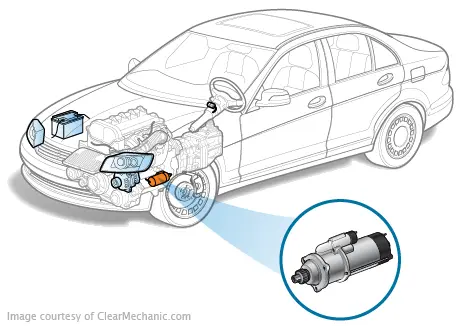
How does the starter work?
The starter solenoid receives power from the battery at all times. When you turn the ignition to the start position, it sends an electrical charge to the solenoid, and allows battery power to move from the solenoid to the starter motor.
This causes the starter motor to turn the engine's flywheel, forcing the crankshaft to turn until the engine begins running on its own.
If only a "click" is heard when trying to start the vehicle, the battery may be low, battery connections may be dirty or loose, or the starter solenoid may have failed. The entire starting and charging system should be inspected before replacing the starter.
If the battery cables are found to be corroded, they will need to be cleaned and possibly replaced along with the starter.
Corroded and/or loose battery terminals can exhibit the same symptoms as a faulty starter.
A bad switch will have the same symptoms as a defective starter. For vehicles with an automatic transmission, ask to have the neutral safety switch inspected. Manual transmission vehicles should have the clutch pedal switch checked.
What are the symptoms related to a bad starter?
Starter motor failure produces one common symptom across all makes and models: When you turn the key, the starter solenoid will click, but the engine will not rotate.
You also might hear a whirring, or fast spinning noise when the key is turned. In this case, the starter solenoid and starter should be inspected for failure.
Can I drive with a starter problem?
Vehicles with automatic transmissions won't start if there's a problem with the starter.
If your car has a manual transmission, it is possible to start the car by turning the key to the "On" position, pressing in the clutch, pushing the car until it gets up to about 10 mph, and then releasing the clutch.
However, this method is difficult and can be dangerous, so you should get the starter replaced right away.
How often do starters need to be replaced?
Most vehicles will have a starter fail at some point. Failure rates are low for the first 75,000 miles or so, but after that, the rate of failure increases dramatically, with the majority occurring around the 125,000-mile mark.
Vehicles that start and stop frequently, such as newer cars with automatic engine start-stop functionality, are at a higher risk of premature failure.
How are starter issues diagnosed?
A mechanic will connect a vehicle that won't start to a starting and charging system test machine. The machine will display results and indicate the possibility of starter failure, but it may also require the technician to do visual inspections while testing is in progress. If the starter is found to be at fault, it will be removed, bench tested and replaced.