Spark Plug Replacement
What is a spark plug?
Spark plugs are a crucial part of the vehicle’s ignition system. They provide the spark that ignites the air-fuel mixture inside the engine, creating the chain-reaction that generates the engine’s power.
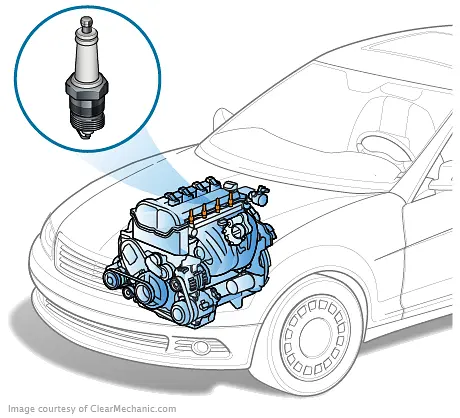
How does the spark plug work?
The spark plug turns high voltage electricity from the ignition coil into a strong spark inside the engine. This ignites the air-fuel mixture, creating power.
Failing spark plugs can cause the engine to run rough and misfire, which can trigger the Check Engine Light. Continuing to drive under these conditions can damage the catalytic converter.
What are the symptoms related to a bad spark plug?
When spark plugs fail, the engine will struggle. The check engine light will come on, and it may appear either solid or flashing. The driver would likely notice one or more of the following: engine vibrations, rough idling, poor gas mileage, excessive cranking time needed to start the engine, and power loss or surging. In extreme circumstances, the engine may stall or fail to start.
Can I drive with a spark plug problem?
The car will run with a spark plug problem, but it's not wise to keep driving it this way. If a spark plug isn't working, unburned fuel from the engine will get into the exhaust at a higher rate, causing problems for the catalytic converter. If the converter gets ruined by this unburned fuel, it will lead to a costly repair.
How often do spark plugs need to be replaced?
Spark plugs do eventually wear out, and failure is most common after 100,000 miles of use under normal driving conditions. But that can be greatly shortened by harsh conditions or leaking fluids.
How are spark plug issues diagnosed?
If the spark plugs are suspected, they're checked for proper connection with the ignition coil. If that's OK, the plugs must be removed, and the spark plug gap must be checked.
If the gap is too small because of corrosion, or too large because or deterioration, they will be replaced. If the spark plug is in good condition, a tester is used to find whether the spark plug is able to produce spark.
How is a spark plug replaced?
On newer vehicles, spark plug replacement involves removing the engine cover, ignition coil harness and ignition coils, and then finally the spark plugs. For most older vehicles, removing the spark plug wires and spark plugs is all that's required.
Once the spark plugs are removed, the gap on the new spark plug is set, and the plug is installed using an anti-seize compound and proper torque. Prior to reinstalling the spark plug wire or ignition coil, dielectric grease is applied to the spark plug terminal to promote the transfer of electricity.
To prevent ignition misfires and Check Engine Light problems, we recommend using only high-quality spark plugs, and preferably spark plugs from the OEM.
Spark plugs have different ratings and it's important that the correct ones are used.