Oil Pan Gasket Replacement
What is an engine oil pan gasket?
The oil pan gasket seals the surfaces between the oil pan and the lower part of the engine block.
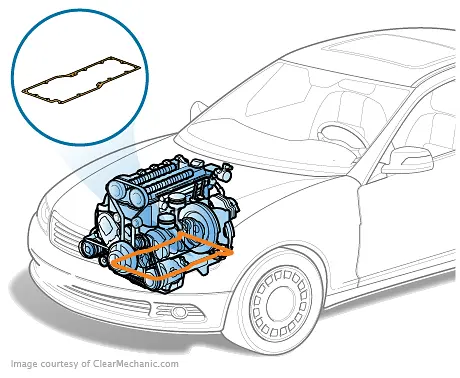
How does the engine oil pan gasket work?
The engine's oil pan is attached to the bottom of the engine. It holds the engine's oil capacity, acting as a reservoir for oil circulating through the engine's oil passages. The oil pan gasket is sandwiched between the bottom of the engine block and the oil pan to keep circulating oil inside the engine.
Some engines have an upper and lower oil pan gasket; in these cases, we quote for the lower pan gasket only.
What are the symptoms related to a bad engine oil pan gasket?
An oil leak may be noted on the ground where the vehicle is parked. However, many vehicles have plastic trays underneath the engine that may catch leaking oil and conceal the leak. In such cases, a low oil level, a burning oil smell, or even smoke from oil burning in the engine bay may be noted.
»MORE: Signs of a bad oil pan gasket
Can I drive with a engine oil pan gasket problem?
A vehicle can still be driven with a leaking oil pan. However, it will become necessary to check the oil and top the oil level off more often. A leaking oil pan increases the risk of driving with insufficient oil in the engine, starving oil driven parts. Damage to timing chain tensioners, camshaft bearings, crankshaft bearings, and other oil lubricated components is probable if the vehicle is driven with low oil.
How often do engine oil pan gaskets need to be replaced?
Repair intervals vary greatly by vehicle and driving conditions. The oil pan gasket does not wear like a tire or a ball joint, but eventually the gasket's rubber or cork will degrade to the point of leakage. Often, leakage of the oil pan gasket is visible during normal servicing (such as an oil change) so it typically doesn't go unseen for too long.
How are engine oil pan gasket issues diagnosed?
It is easiest to spot oil leaks when they are new or fresh. The technician may clean the fluid around the leak and direct you to come back later to confirm where the leak is coming from. With more progressed oil leaks, the technician will also add a dye to the oil. After the vehicle has been driven with the dye, a UV light will be used to pinpoint the leakage and recommend repair.
The oil pan is on the bottom of the engine, so any oil leaks from the top or front of the engine could drain down and look like an oil pan leak. It's important to verify that there are no other leaks before having the oil pan resealed.
How is an engine oil pan gasket replaced?
The technician will drain the oil and remove the oil pan from the engine. Removal of the oil pan may require raising of the vehicle or removal of the front subframe. The mating surfaces on both the engine block and the oil pan will be cleaned and a new gasket will be applied. Some vehicles have a paper gasket, while others may only require an application of sealant according to the manufacturer. Once the pan is installed, the engine oil will be refilled to the correct level and the technician will check for leaks to ensure a proper repair.
RepairPal Recommendations for engine oil pan gasket issues
Proper diagnosis is needed to pinpoint the leak. An external head gasket leak, a split line, or a crank seal can also be the source. The oil pan itself should be inspected. Many vehicles have cast oil aluminum pans that can crack and continue to leak after the pan gasket has been replaced. Motor mounts should be inspected. Oil leakage can weaken them and it may be convenient to replace them during this repair.