Axle Shaft Seal Replacement
What is an axle shaft seal?
The axle seal is a doughnut shaped piece of flexible material which can be mounted to a metal or hard rubber backing. It prevents a leak at the axle entry point while allowing the axle to rotate as necessary.
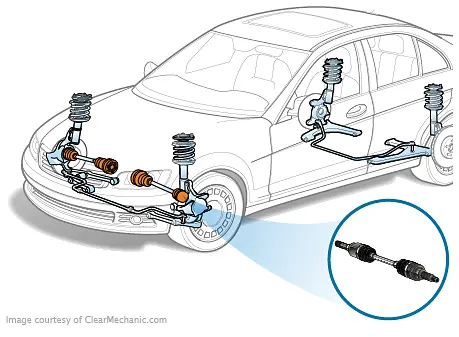
How does the axle shaft seal work?
The seal slips over and rides on a smooth portion of the axle shaft. The softer rubber forms to the surface of the axle in order to keep transmission/axle fluid in and dirt out.
What are the symptoms related to a bad axle shaft seal?
A slight axle seal leak may only appear as a damp area around the seal. A more severe leak will result in fluid leaking on the ground. Leaking fluid can also find its way onto the exhaust system, resulting in a burning smell when the exhaust is warm. Excessive fluid loss due to a leak can result in an abnormal noise and/or component failure. On some vehicles an axle seal leak can result in fluid contaminating brake shoes and affect braking operation.
Can I drive with an axle shaft seal problem?
It is generally OK to drive if “seepage” is noted from an axle seal provided the correct fluid level have been verified in the transmission/axle. It would not be advisable to drive with a more severe leak as the fluid loss could result in component damage.
How often do axle shaft seals need to be replaced?
Many vehicles never experience and axle seal leak. If one does occur it would most likely be on a higher mileage vehicle.
How are axle shaft seal issues diagnosed?
Axle seals leaks are most commonly diagnosed by visual inspection. In cases where the cause of the leak cannot be pinpointed, dye or tracing powder can be used as an aid in locating the leak. Prior to replacing the seal, the axle shaft should be inspected for up/down movement in the housing. Excess movement would indicate worn internal components. Any worn component(s) should be replace prior to replacing the seal.
A worn axle shaft support bearing can cause premature failure of the axle shaft oil seal.
How is a axle shaft seal replaced?
To replace an axle seal, the axle must be disconnected from the transmission/axle. The seal is then carefully removed from the housing - sometimes a special puller may be required to remove the seal. It is very important not to damage the housing when removing the old seal or installing the new one. The new seal is then seated in place, perhaps with a bit of sealer around the outside edge where it meets the housing. Prior to installation the flexible material should be coated with the appropriate fluid. The surface of the axle shaft that the seal rides on should also be inspected for wear or other damage, a damaged axle can ruin the new seal.
Gear oil can leak onto the brake shoes from a worn axle seal. Brake shoes contaminated with gear oil should be replaced.
RepairPal Recommendations for axle shaft seal issues
A quick visual inspection of all axle seals should be made while the vehicle is raised on a lift for a routine service/inspection. A leaking seal should be replaced to prevent internal component damage due to fluid loss. Always use the correct fluid type when topping of transmission/axle fluid after seal replacement.