What is a brake master cylinder?
The master cylinder is mounted under the hood, in front of the brake pedal. It is the first step to developing braking force, and simultaneously controls the action of the individual brakes.
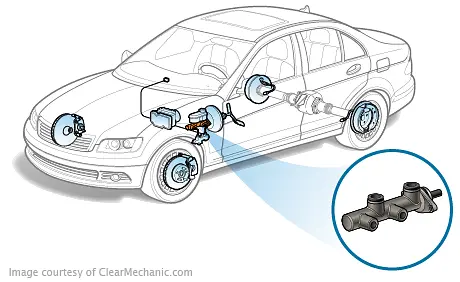
How does the brake master cylinder work?
When the brake pedal is pressed, the master cylinder pushes fluid under high pressure to the brake calipers, forcing them to squeeze the brake pads into the brake rotor. This pressure is created by two small plungers inside the master cylinder that compress the brake fluid as the brake pedal pushes them forward.
A failing brake master cylinder can cause the brake pedal to sink, feel spongy, and be unresponsive when depressed. It may also feel like the brake pedal goes all the way to the floor when braking. This is a very serious condition—the car should not be driven.
A defective brake master cylinder can set a diagnostic trouble code and cause a warning light on the dashboard to illuminate.
Brake master cylinders are often replaced when they begin to leak brake fluid.
What are the symptoms related to a bad brake master cylinder?
The term
'spongy' is well known in the automotive field, and describes the feeling of the brake pedal when air has been introduced into the master cylinder, or the master cylinder has pushed air into the brake lines. The brake pedal may also sink to the floor when pressed and held. This indicates the plungers inside the master cylinder are leaking internally, and will not produce the pressure needed to cause the vehicle to slow or stop.
Learn more about brake master cylinder symptomsCan I drive with a brake master cylinder problem?
It is not safe to operate any vehicle with any braking problem. If there exists any sign that the brakes are not performing as originally intended, the vehicle should immediately be placed out of service, and repaired. Collisions result from brake system failure, and the parking brake should never be substituted for the normal service brakes.
How often do brake master cylinders need to be replaced?
Replacement of the brake master cylinder is a common repair to many makes and models, however, the majority of vehicle's will not need this repair before 125,000 miles. This is because there are very few moving parts, and the system is sealed from air, dust, and other brake fluid contaminants. Each manufacturer protects their customers from master cylinder failure by providing a schedule for maintenance for the entire braking system. This maintenance includes flushing the brake fluid, cleaning, and inspecting components, as well as replacement of wear and tear parts. Following these recommendations may even ensure the master cylinder will last the lifetime of the vehicle. However, neglecting maintenance specified by the factory may cause premature wear of the master cylinder plungers, leading to an early onset of the mentioned symptoms.
How are brake master cylinder issues diagnosed?
The operation of the brake pedal is the best indicator of master cylinder failure. If the pedal falls to the floor when pressed, little or no braking force is being created, and there are no external leaks, there is a strong possibility the master cylinder has failed. If the brake pedal becomes firm after pressing quickly and repeatedly, but returns to the floor when held, the master cylinder will most likely be at fault.
How is a brake master cylinder replaced?
After the brake fluid is drained from the system, the brake lines must be removed from the master cylinder. There is normally one electrical connector to remove, and finally, the master cylinder can be unbolted and removed from the brake booster. Replacing the master cylinder is the reverse order, but the master cylinder must be bled of air prior to bleeding the air from the rest of the braking system.