The oxygen sensor, sometimes called an O2 sensor, is a device mounted in the exhaust system that constantly monitors the oxygen content in the gases that exit the engine.
Oxygen sensors are located before and after the catalytic converter. A vehicle may have two to five oxygen sensors, and sometimes even more.
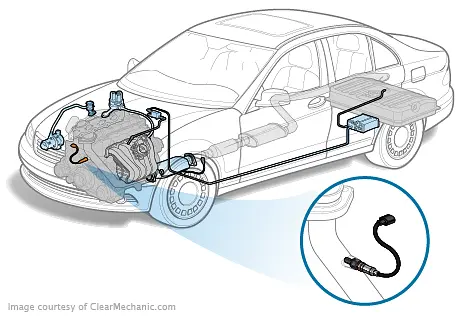
How does the oxygen sensor work?
The information from the oxygen sensor is used by the engine's computer to help determine how much fuel is needed so that the engine will run efficiently. The sensor sends this information by producing voltage when the sensor is heated. The voltage rises and falls as oxygen levels in the exhaust rise and fall.
A failed oxygen sensor may cause the vehicle to fail an emissions test. The failed sensor will cause a trouble code to be set and the Check Engine Light to illuminate.
Oxygen sensors can fail if they are contaminated with oil, coolant, or silicone. If fluid contamination has caused an oxygen sensor failure, the source of the fluid must be resolved or the new sensor may be ruined.
What are the symptoms related to a bad oxygen sensor?
A faulty oxygen sensor is one of the most common causes of a check engine light. Symptoms may include a decrease in fuel mileage, hesitation or misfiring from the engine, rough idling or even stalling. A faulty sensor may cause the vehicle to fail an emissions test.
Can I drive with a oxygen sensor problem?
Need a repair? Trust our RepairPal Certified network.
With thousands of repair shops to choose from, how do you find one that is honest and fair? We've done the research for you.
A vehicle that has a bad oxygen sensor can be driven safely until the sensor can be replaced. But the car will not run as well until the repair is made.
Oxygen sensors can fail if they are contaminated with oil, coolant or silicone. If fluid contamination has caused an oxygen sensor to fail, the leak must be fixed or the new sensor may be ruined too.
How often do oxygen sensors need to be replaced?
On cars manufactured since 1996, oxygen sensors can go 100,000 or more before needing to be replaced. That mileage decreases on older cars.
How are oxygen sensor issues diagnosed?
A faulty oxygen sensor is usually diagnosed by a technician using a diagnostic scan tool. The sensors are arranged in banks, usually on the right and left sides of the engine, and the scan tool alerts a technician to which sensor is not working properly.
Intake and exhaust leaks can trigger an oxygen sensor trouble code, but the oxygen sensor does not require repair. Repairing the leak will resolve the problem.
On vehicles 1996 and newer, using an inexpensive "universal" oxygen sensor will cause problems with the emissions system and is highly discouraged.
Get a RepairPal Fair Price Estimate® for your 1996 Ford E-350 Econoline Club Wagon.
Our Fair Price Estimate will help you avoid overpaying based on your car, needed service, and labor rates in your area.
Ford Oxygen Sensor Replacement Cost Estimates
The average cost for a Oxygen Sensor Replacement is between $143 and $216 but can vary from car to car.