Pinion Seal Replacement
What is a Differential Pinion Seal?
The differential pinion seal is easily spotted between the differential and the pinion shaft flange (where the driveshaft attaches to the differential). This seal is combined with an 'oil slinger' to prevent the oil from the differential from running out of the differential housing as the pinion shaft is turned by the drive shaft. It is round, and uses a rubberized seal in the shape of a continuous circle to surround the pinion shaft. This rubberized seal is pressed against the pinion shaft by a light spring which is inside the rubberized portion of the seal, so it makes firm contact with the pinion shaft from all angles, at all times.
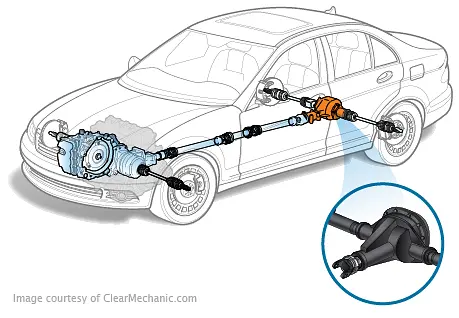
How do Differential Pinion Seals prevent leaks?
With the pinion shaft being surrounded by the seal, small lips on the seal face the inside of the differential, so any oil that makes it past the oil slinger (a small disc in front of the seal) will only slide up the oil seal, not under it. This causes the oil to return to the differential case instead of flowing between the seal and pinion shaft. It should be noted that these seals are not 100% effective against stopping oil, and in many vehicles seepage is considered normal after several thousand miles.
A leak may be noted at the differential where the driveshaft enters. Wetness on the differential case or the universal joint will indicate a worn Pinion Seal.
A leak at the Pinion Seal will result in low fluid level, which can cause damage to the differential. Noise or vibration may be noted.
What are the symptoms of a bad Differential Pinion Seal?
The only symptom of a leaking pinion seal is fluid contamination on the exterior of the differential housing, driveshaft, and in a straight line across the bottom of the vehicle where the seal is located. This is because the leaky seal will leave oil on the driveshaft and pinion shaft flange, which will then throw the oil in a circular pattern while the driveshaft spins. If the leak has gone unchecked over time, the differential may begin to make rapid clicking sounds as the lack of fluid is causing contact between the metal gears inside the differential.
Can I drive with a bad Differential Pinion Seal?
This seal should be repaired when it is noticed to be leaking. It will normally seem small and insignificant, but over time this can destroy the differential due to oil starvation. Waiting until there is a noise present will nearly certainly cause failure of the differential assembly.
How often do Differential Pinion Seals need replacement?
These seals tend to fail between the 100,000 and 150,000 mile mark. Some of these are changed due to seepage, and that is decided by the manufacturer's recommendation. To prevent early failure, or even extend the life of the seal, the driveshaft and differential should be maintained properly, and driveline vibrations should be inspected and repaired appropriately once noticed. Replacing the differential fluid and cleaning the differential housing should be done according to the maintenance schedule for the vehicle, and accelerated schedules are available for severe use.
How are Differential Pinion Seal issues diagnosed?
Diagnostics are simple for the pinion shaft seal. When oil is noticed to leak from the seal or build up around the seal, it will likely be recommended for replacement. Also, if there is play in the pinion shaft or driveshaft, any oil seepage from the oil seal will continue once the symptom is corrected, so the seal must be replaced. This is due to uneven wear of the rubberized seal on the pinion shaft.
How are Differential Pinion Seals replaced?
This difficult task is more physically taxing than anything, but also requires knowledge of setting preload on the pinion shaft bearing. Preload is the measurement of force applied to a bearing, and is measured by the force required to turn the pinion shaft. In some cases, the original position of the pinion gear nut can be marked against the pinion shaft flange, but this is not the proper procedure for all vehicles. In a worst case scenario, the differential cover is removed, and the differential is drained of oil. Then, the driveshaft and pinion shaft nut are removed so the pinion shaft seal can be pried from the differential housing. The new seal is installed with a drift, and the flange and nut can be reinstalled, but not tightened. Now, the drive axles, of various types, can be removed from the differential so the reload measured does not include the force of rotating the axles. Setting the preload for the bearings requires torquing the pinion nut, checking the force to turn the pinion shaft, and repeating until the pinion shaft turns at the specified tension, according to the service manual for the particular vehicle. Once complete, the driveshaft, axles, rear differential cover, and fluid may be replaced. Note, this is not a complete how-to, and there are vital steps which vary for individual vehicles, following the service manual is extremely important.
The drive shaft flange should be inspected for wear if the differential pinion seal is replaced. A worn flange can cause repeat seal failure.