Exhaust Manifold Replacement
Jump to:Cost estimates by vehicle
How are exhaust manifold issues diagnosed?
Identifying an exhaust manifold leak can be very easy if you hear ticking and can smell exhaust — but minor leaks can be tricky. Ordinarily, the vehicle will be raised and the exhaust manifold will be inspected for signs of leaks, such as black marks and nearby burned components. If there are no signs, the exhaust may be smoke tested or plugged to help diagnose it.
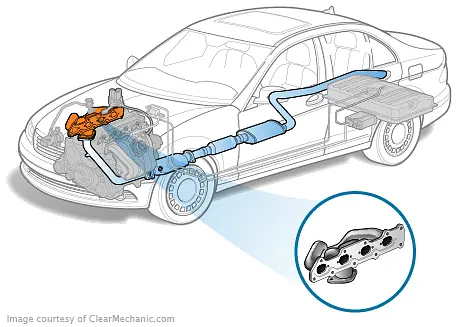
How is an exhaust manifold replaced?
The manifold retaining hardware and old gasket will be removed, and all touching surfaces should be cleaned thoroughly. If the manufacturer specifies sealant, it is applied to the gasket; otherwise, the gasket is placed on the exhaust studs.
The new exhaust manifold will slide in place on the gasket, and the technician will torque the retaining fasteners to factory specification.
RepairPal recommendations for exhaust manifold issues
We recommend using at least OEM-quality parts for this repair.
What to look out for when dealing with exhaust manifold issues
The exhaust system operates at extreme temperatures, so metal will become brittle after a long service life. So, any fasteners need to be replaced during this repair.
Can I replace the exhaust manifold myself?
This is doable at home only if you can diagnose the leak at home with certainty, and if the leak is caught early.
If the problem caught late, the exhaust valves must be inspected by a trained professional technician. If any welding is required, a professional exhaust welder should complete the repair.