Brake Master Cylinder Replacement
How are brake master cylinder issues diagnosed?
The operation of the brake pedal is the best indicator of master cylinder failure. If the pedal falls to the floor when pressed, little or no braking force is being created, and there are no external leaks, there is a strong possibility the master cylinder has failed. If the brake pedal becomes firm after pressing quickly and repeatedly, but returns to the floor when held, the master cylinder will most likely be at fault.
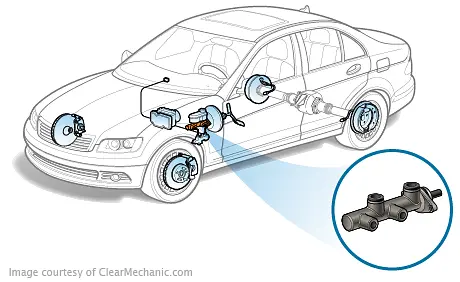
How is a brake master cylinder replaced?
After the brake fluid is drained from the system, the brake lines must be removed from the master cylinder. There is normally one electrical connector to remove, and finally, the master cylinder can be unbolted and removed from the brake booster. Replacing the master cylinder is the reverse order, but the master cylinder must be bled of air prior to bleeding the air from the rest of the braking system.
RepairPal Recommendations for brake master cylinder issues
If the master cylinder has failed, there is a possibility of rubber particles floating through the brake lines. Rubber can be compressed, whereas brake fluid cannot. This means that rubber particles in the brake lines can produce the same symptoms as air, and a spongy feeling brake pedal may result. To avoid this, the brake system must be thoroughly flushed to return the brakes to normal operations.
What to look out for when dealing with brake master cylinder issues
Master cylinders, as noted above, have two plungers that push fluid. If one of them fails, either the front or rear brakes may work properly, while the others will not. This will greatly reduce stopping power. If braking ability has diminished, the vehicle should be towed to a repair facility, and only driven once repaired. Mixing brake fluid types can cause complete brake system failure. The type of fluid noted on the master cylinder is the only type that should be introduced to the system. Normally DOT-3 brake fluid is used, but this varies by vehicle. Brake fluid is corrosive to automotive paint, and can cause blindness if contact with the eyes occurs.
Can I replace the brake master cylinder myself?
The braking system can be maintained by a DIYer with a complete knowledge of hydraulically actuated systems. This is important as testing brake operation, and safe installation of braking components rely on this knowledge. If the complete braking system is not understood, damage to the expensive braking components, or injury is likely. Trusting a professional technician with the replacement of a master cylinder is normally the best course of action.