Problem Reports
Problem with your car? See what our experts say or submit your own.
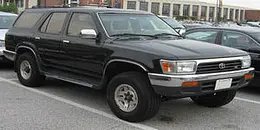
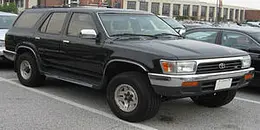
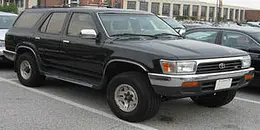
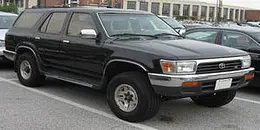
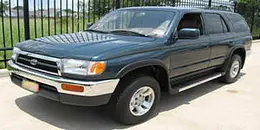
1997 Toyota 4Runner Problems
Automatic Transmission May Not Shift Correctly at High Mileages
At higher mileages, (125,000-150,000) the automatic transmission may not shift correctly. This can be caused by the throttle position sensor being out of adjustment or a shift solenoid needing to be replaced. Typically the transmission does not need to be completely overhauled.
Front Brake Rotor Wear Can Cause Pulsations
Front brake rotors can wear causing a pulsation felt in the brake pedal. Our technicians tell us this condition is best corrected by replacement of the front rotors and brake pads.
Check Engine Light Due to Restricted EGR System
The EGR System tends to get restricted or blocked with carbon after 100,000- 125,000 miles which will cause an emissions test failure for NOX. If the EGR system is equipped with an EGR temperature sensor it will trigger a Check Engine Light for improper EGR flow. The repair is to clean out the EGR passages and the EGR Temperature sensor. Our technicians tell this repair is pretty straight forward and takes about 1-1.5 hours. It is also wise to verify the EGR system components i.e. the Transducer, EGR Valve and VSV Solenoid at this time.
Worn Shift Bushings Will Cause Manual Transmission to Pop Out of Gear
On vehicles with a manual transmission, worn shift bushings can cause the transmission to pop out of gear, especially when coasting down in 1st or 2nd gear. Replacing all the shift linkage bushings is pretty straight forward and not expensive and will commonly correct this concern.
Engine Won't Crank Due To Starter
If the engine will not crank over, the most common problem is the starter. These will tend to go out at about 100,00-125,000 miles. Sometimes it is only the starter solenoid, but often the complete starter (including solenoid) needs to be replaced.
Improperly Adjusted Valves May Cause Emissions Failure/Rough Idle
A rough idle and even an emissions inspection failure for high HC and CO can be caused by improperly adjusted valves. Also, exhaust valves may become to tight which can lead to valve failures. Our technicians tell us that regular valve adjustment inspections are a must.
Rattling Noise From Front of Engine
The timing chain can develop a rattling noise caused by failing timing chain guides. This is often due to extended mileage intervals between oil changes that allows the oil to become dirty and abrasive which wears away the timing chain guides until they fail. The timing chain and guides should be inspected at each valve adjustment, otherwise serious engine damage may result.
Bleed rear level sensor for correct rear brake operation
Regularly check valve clearance so valves don't become too tight
Replace Oxygen Sensor When Servicing EGR System
Over the time the exhaust gas recirculation (EGR) system may become plugged with debris, the oxygen sensor may also be getting slow or 'lazy' around this time. When servicing or cleaning the EGR system, it is a good idea to replace the oxygen sensor because it works in tandem with the EGR system.
Driveability Concerns Due to Throttle Position Sensor Out of Adjustment
The Throttle Position Sensor can get out of adjustment due to wear in the throttle body or due to carbon build up. This will cause the idle timing to advance more than 30 degrees which will cause very high HC and NOx emissions. Conversely, the Throttle Position Sensors can wear out and not properly advance the timing which causes a lack of power and poor fuel economy.
Check Engine Light Due to Failed Coolant Temperature Sensor
At higher mileages (125,00+) the Engine Coolant Temperature Sensor may intermittently stop working, especially when the vehicle is fully warmed up. This can result in illumination of the Check Engine Light and/or an engine stalling problem.
ABS Warning Light Due to Failed Wheel Speed Sensor
At higher mileages, an anti-lock brake system wheel speed sensor may wear out and illuminate the ABS warning light. It is recommended to replace the sensor with a factory part and be sure to clean all rust and debris from the mounting area because the mounting distance is critical. Failure to do so may result in the new sensor setting false trouble codes. Be sure to check the condition and runout of the front wheel bearings on the 2WD and 4WD vehicles and the CV joints on the 4WD vehicles since worn wheel bearings and/or CV joints can cause the ABS trigger rings to rub against the ABS sensors and damage them.
Air flow sensor may fail at higher mileages
Loss of Power at Freeway Speeds
A loss of power on the freeway may due to an internally leaking fuel pulsation dampener. This commonly occurs on higher mileage vehicles.
-
Verified
Quality Work -
Guaranteed
Fair Prices -
Happy
Customers