Problem Reports
Report A ProblemProblem with your car? See what our experts say or submit your own.
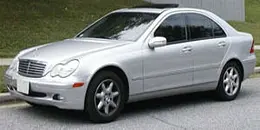
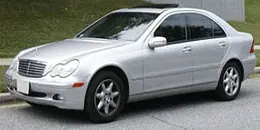
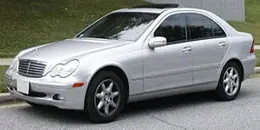
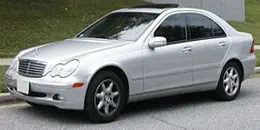
2001 Mercedes-Benz C240
Clicking Noise From Behind Center of Dash
A repetitive clicking noise from behind the center area of the dash panel is usually caused by a broken stepper motor actuating arm. The actuating arm controls the direction of air flow in the climate control system. Disassembly of the center console will be required to access and change the broken arm with the updated, reinforced part.
Stalling and/or "Crank no Start" Due to Failed Crankshaft Position Sensor
The engine may develop a stalling and/or no start condition due to a failed crankshaft position sensor.
Knocking Noise Over Bumps Due to Worn Sway Bar Link Joints
The sway bar end link joints may wear and cause a knocking noise over bumps. Loose or warn links should be replaced to correct this type of noise.
Inside Grab Handles/Upholstery/Door Trim Panels May Delaminate
Inside grab handles, the upholstery on the center console cover, and door trim panels can delaminate. Most commonly replacement of the affected part is necessary.
Dead Battery Due to Failed Seat Control Module
A dead battery can be caused by a faulty seat control module that does not properly shut down. Spilling liquids on the front seats can cause these modules to fail.
Transmission May Leak Fluid and Damage Control Module
The electrical connector at the automatic transmission may leak fluid. Over time leaking fluid could migrate through the wiring harness and damage the transmission control module. If that happens a new harness and control module may be necessary to correct the problem.
Check Engine Light on Due to Failed Catalytic Converter
Catalytic converter failure is common and may cause a Check Engine Light to illuminate.
CD Changer May Suffer From Internal Mechanical Problem
The CD changer may suffer from an internal mechanical problem. Replacement of the faulty unit is generally required to correct this issue.
Brake Light Switch Failure May Cause ESP/BAS Warning Lights
The ESP and BAS warning lights may illuminate due to a failed brake light switch. Replacement of the failed switch should correct this concern.
SRS Light Due to Spilled Liquid on Buckle or Under Seat
The SRS (airbag) light can come on if liquids are spilled into the seat belt buckles, or if the liquid pools underneath the seat and gets into the electrical connector for the seat belt pretensioner. Damaged components will require replacement to restore proper airbag operation.
Heater case may crack
Squeaking/Worn Brake Pads May Require Rotor Replacement Also
Due to the size and material used on the brakes of these vehicles, the brakes may start to squeak around the 50 percent wear point. The brake rotor surfaces become uneven, causing a lip to form at the outer edge of the rotor. Because of this, the rotors are usually replaced when the pads are worn (pad life varies depending on driving style and terrain).
The Differential May Develop Leaks From the Seals or Cover
Leaks may develop from the differential cover and/or seals on high mileage or older vehicles. Our technicians recommend a complete reseal of the differential unit if these leaks are addressed.
ABS Modulator Failure Due to Dirty Brake Fluid
The anti-lock brake system (ABS) modulator assembly may fail due to dirty brake fluid. Our technicians recommend a complete brake system flush every two years in order to help prevent this problem.
Oil Leaking From Oil Level Sensor
An engine oil leak may develop from the oil level sensor. Replacement of the leaking sensor will commonly correct this concern.
Tire Wear Caused By Worn Front Thrust Link Bushings
Irregular and premature tire wear can be caused by the front thrust link bushings cracking and causing excessive movement in the suspension. The thrust link bushings are fluid-filled (to help reduce vibration), so if they crack, they will leak oil.
Hold down nut for front strut may bacome loose
Engine Oil Leak From PCV Vent Housing and/or Engine Inspection Plate
An engine Oil leak may develop from the PCV vent housing on the valve cover and/or the inspection plate on the front of the engine.
Harmonic Balancer May Fail and Damage Timing Cover
The rubber bond in the harmonic balancer can decay, which causes the balancer to move and work its way toward the timing cover. If the balancer comes into contact with the timing cover while the engine is running, it will fracture and damage the cover and potentially other surrounding parts. The harmonic balancer should be inspected at every service.
Spark plug wires causing misfire
Bad spark plug wires can cause misfires; the Check Engine Light may illuminate.
Replace air filter when replacing failed mass air flow sensor
The mass air flow (MAF) sensor tends to fail. The engine air filter should be replaced when the mass air flow sensor is replaced; a dirty filter can allow debris to damage the new sensor.
HVAC Oder Due to Mildew in Heater Box
The heating, ventilation and AC (HVAC) heater box is susceptible to mildew buildup. This can result in a musty odor from the HVAC system, most noticeable when the system is first turned on.
Cracked Driveshaft Flex Discs May Cause Driveshaft Movement/Vibration
A vibration felt through the center floor of the vehicle can be caused by driveshaft flex discs, which crack and shred, causing excessive driveshaft movement. Not repairing these can cause damage to the driveshaft center support bearing, or, in the worst case scenario, damage to the transmission or differential.