Problem Reports
Problem with your car? See what our experts say or submit your own.
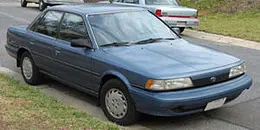
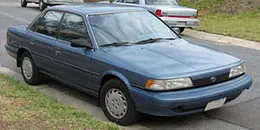
1991 Toyota Camry Problems
Power Steering Leak From Pump and/or Hose
The power steering pump and power steering hoses tend to develop leaks, particularly in the V6 models.
One or More Motor Mounts May Wear Out on Higher Mileage Vehicles
One or more motor mounts may wear out on cars with high mileage. This will put extra stress on the other mounts, and the faulty mount(s) should be replaced.
Check Engine Light Due to Restricted EGR System
The EGR System tends to get restricted or blocked with carbon after 100,000- 125,000 miles which will cause an emissions test failure for NOX. If the EGR system is equipped with an EGR temperature sensor it will trigger a Check Engine Light for improper EGR flow. The repair is to clean out the EGR passages and the EGR Temperature sensor. Our technicians tell this repair is pretty straight forward and takes about 1-1.5 hours. It is also wise to verify the EGR system components i.e. the Transducer, EGR Valve and VSV Solenoid at this time.
Driving Over Bumps May Cause Loud Noises in Body of Vehicle
Driving over bumps causes loud, annoying noises in the body of the car. If the noise is a groaning or creaking, it can be improved by lubricating the rubber joints in the suspension system. If the noise is a rattling sound, the problem is likely wear and tear on the upper mounting plate for one or more of the suspension struts.
Hesitation or No Start Due to Internal Distributor Fault
The ignition coil inside the distributor may fail. Our technicians tell us this may result in a hesitation on acceleration, especially when the vehicle is warming up on cold, rainy days. The pickup coils inside the distributor can also fail and cause a no-start condition. There have also been some failures of the radio noise suppressors inside the distributors, which can short out. Our technicians recommend replacing the whole distributor with a complete, genuine Toyota distributor if any of its components fail.
Engine Won't Crank Due To Starter
If the vehicle will not crank over, the most common problem is the starter, which tend to fail at about 100,00-125,000 miles. Sometimes it is only the starter solenoid contacts, but often the complete starter (including solenoid) needs to be replaced.
Replace Oxygen Sensor When Servicing EGR System
Over the time the exhaust gas recirculation (EGR) system may become plugged with debris, the oxygen sensor may also be getting slow or 'lazy' around this time. When servicing or cleaning the EGR system, it is a good idea to replace the oxygen sensor because it works in tandem with the EGR system.
Replace ignition key by 100,000 miles
Regularly check valve clearance so valves don't become too tight
It is important to regularly check the valve clearance as the exhaust valves may become too tight. This will lead to valve failures, which are expensive to repair.
Automatic Transmission May Not Shift Correctly at High Mileages
At higher mileages, (125,000-150,000) the automatic transmission may not shift correctly. This can be caused by the throttle position sensor being out of adjustment or a shift solenoid needing to be replaced. Typically the transmission does not need to be completely overhauled.
Service AC system at 150,000 miles or every two to three years
Usually by 150,000 miles the AC system will need some attention, especially in climates where it is used often. Our technicians tell us that it is best to service the AC system every 2-3 years. This keeps the moisture in the system at a minimum which extends the life of the components.
Front Brake Rotor Wear Can Cause Pulsations
Front brake rotors can wear causing a pulsation felt in the brake pedal. Our technicians tell us this condition is best corrected by replacement of the front rotors and brake pads.