Get the latest advice about your car

Get Started
Advice » Problem Reports » Most Reported

Problem Reports

Report A Problem

Problem with your car? See what our experts say or submit your own.

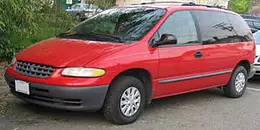
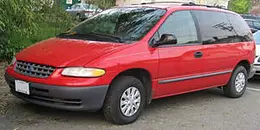
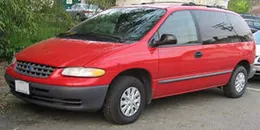
2000 Plymouth Voyager

AirBag Light Due to Failed Clockspring

Verified for the Plymouth Voyager

Illuminated of the airbag warning light may be caused by a lost connection between the clockspring (behind the steering wheel) and the steering wheel-mounted electrical components. Other steering wheel-mounted controls like the horn, speed (cruise) control, or radio controls (if equipped) may be inoperative. There is a lifetime warranty on the clockspring as specified in a combination of recall campaigns. For more information on these recalls please us the following links; 1996-1998 models, please click here». For 1998-2000 models, please click here»

8 Reports

Power Windows May Stop Working

Verified for the Plymouth Voyager

One or more power windows may stop working due to a failed window motor or regulator. In some cases these items are replaced as a set. If not, diagnoses will be required to determine which is at fault.

6 Reports

Timing Cover Oil/Coolant Leaks are Common

Verified for the Plymouth Voyager

Timing cover oil and coolant leaks are common, the oil and coolant don't normally mix. Our technicians recommend to replace the timing chain and cam sprocket if the timing cover is removed to reseal - or for any other reason.

6 Reports

Head Gasket May Fail Prematurely

Verified for the Plymouth Voyager

There have been reports of premature head gasket failure; an updated gasket design is available to correct this problem.

5 Reports

Oil Leak May Develop at Cam Sensor O-Ring

Verified for the Plymouth Voyager

An engine Oil leak may develop at the cam sensor o-ring seal. Our technicians tell us this is often misdiagnosed as an external head gasket leak.

5 Reports

Transmission Problems on AWD Vehicles Due to Mismatched Tires

Verified for the Plymouth Voyager

AWD equipped vehicles can show a wide range of transmission problems, often caused by using the wrong-sized and/or mismatched tires. Be sure that all the tires are the same and that all four are replaced at the same time. Dodge recommends tire rotation every 7,500 miles.

5 Reports

Rear brake drum rust

Verified for the Plymouth Voyager
While driving through deep or blowing snow/water, moisture may enter the rear brake drums, causing rust to develop on the rear brake drum and shoe friction surfaces. Over time, repeated (and sometimes infrequent) exposure to the snow can lead to temporary freezing of the rear brake linings to the drums. A revised brake drum and brake drum backing plate is available.
5 Reports

Stalling or Low Engine Idle Speed Due to Dirty Throttle Body

Verified for the Plymouth Voyager

A dirty throttle body may cause low engine idle speed or frequent stalling, as oily residue blocks air flow in the throttle when the throttle is closed. Throttle body cleaning may be necessary to correct this condition. Our technicians caution against spraying cleaner directly onto the throttle body as this may damage the throttle position sensor (TPS).

5 Reports

Spilling sticky liquids around cup holder may cause lid to stick/break

Verified for the Plymouth Voyager
Spilling beverages around the cup holder may cause the lid to stick or bind. To fix the problem, remove and wash the cup holder with dishwashing soap and water and apply lubricant to the sliding mechanism.
5 Reports

Key May Not Start Car or Release From Ignition

Verified for the Plymouth Voyager

Intermittently, the key may not start the car or release from the ignition. If it is excessively worn, replace the key. If the new key doesn't work, replacing the lock cylinder including tumblers should correct this concern.

5 Reports

Odor from HVAC vents

Verified for the Plymouth Voyager

Some vehicles may develop a musty odor coming from the HVAC system, Dodge has issued a cleaner/disinfectant and a coating for the evaporator designed to inhibit bacterial growth.

5 Reports

Issues Causing Delayed Transaxle Engagement

Verified for the Plymouth Voyager

A delay in the transaxle engagement (greater than three seconds) may have multiple causes, including a defective pump, defective internal lip seals, valve body components, park-reverse-neutral-drive lever switch, and the output speed sensor. Proper diagnoses will be necessary to determine the exact cause.

5 Reports

Noisy or Failed Power Door Locks

Verified for the Plymouth Voyager

If the door lock actuators (integrated into the door latch assembly) are noisy and/or not working, the latch should be replaced. For some model years, the actuator for the sliding door is available separately from the latch.

5 Reports

Engine Misfire Due to Oil in Spark Plug Tubes

Verified for the Plymouth Voyager

Spark plug tube seals fail, causing the tubes to fill with engine oil and the engine to misfire. As a result, the engine may run poorly and fuel economy can suffer.

5 Reports

Valve cover gaskets/cam plugs may leak oil

Verified for the Plymouth Voyager
Oil leaks at the valve cover gaskets and cam plugs at the rear of the cylinder heads are common.
5 Reports

Oil may seep from between oil filter bracket and cylinder block

Verified for the Plymouth Voyager
Oil may seep from between the oil filter bracket and the cylinder block. Polishing the mating surfaces between the bracket and the cylinder block (to remove rough machining marks) will fix the problem.
5 Reports

Oil Leak From Valve Covers and/or Front Crankshaft Seal

Verified for the Plymouth Voyager

On higher-mileage vehicles, engine oil leaks from the valve covers and front crankshaft seal are common.

4 Reports

Loose timing chain may produce rattle when chain hits guide

Verified for the Plymouth Voyager
A loose timing chain on early models will produce a rattle (in the front of the engine) because the chain hits the guide. The timing chain should be replaced (the cam sprocket should always be replaced at the same time). Remove and discard the timing chain guide; on later V6 models, the guide has been eliminated.
4 Reports

Noise in Front Suspension Due to Worn Sway Bar Bushings/End Links

Verified for the Plymouth Voyager

Worn sway bar bushings or sway bar end links may cause a rattling or clunking noise from the front suspension during low-speed driving. Though not always the root cause, front struts are often replaced for this condition.

2 Reports

New remote transmitter needed if keyless entry remote stops working

Verified for the Plymouth Voyager
If the keyless entry remote is inoperative or working intermittently, a new remote transmitter may be needed. The new remote will need to be programmed to the vehicle.
2 Reports
Ask a Question