Get the latest advice about your car

Get Started
Advice » Problem Reports » Most Reported

Problem Reports

Report A Problem

Problem with your car? See what our experts say or submit your own.

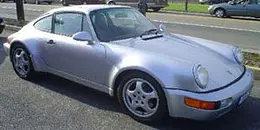
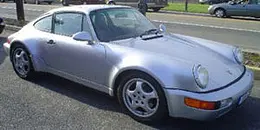
1992 Porsche 911

Check Engine Light due to faulty oxygen sensor

Verified for the Porsche 911

Check Engine Light illumination and performance issues can be caused by oxygen sensor faults.

11 Reports

Brake warning light on in AM

Verified for the Porsche 911
The brake warning display and warning gong can activate, typically after the first start of the day. The warning light/gong might stop after idling for a short time. This fault is usually caused by low stored hydraulic pressure due to a failed high pressure accumulator.
10 Reports

Brake fluid leak from pressure switch

Verified for the Porsche 911
An external fluid leak may develop at the pressure switch; fluid will be evident in the trunk and the reservoir level will drop.
10 Reports

Engine Oil Leaks

Verified for the Porsche 911

Over time, the engine can leak oil at various locations. Early-production vehicles require engine disassembly and modification to resolve leaks at the cylinder heads, oil return tubes, valve covers, timing cover, chain housings, case through bolts, and lines to/from the oil cooler.

10 Reports

Engine misfire or excess fuel consumption can damage catalytic converter

Verified for the Porsche 911

If engine misfiring, rough running, or fuel consumption issues are not resolved quickly, the catalytic converter can overheat and fail.

10 Reports

Failed Hood and Deck Lid Supports

Verified for the Porsche 911

The front hood and rear deck lid support struts may fail; replacement is required.

10 Reports

Brake hydraulic pump relay stays on

Verified for the Porsche 911
The hydraulic pump relay can fail, causing the pump to run continuously, which leads to hydraulic pump failure due to overheating. Incorrect pressures will cause a low brake pedal or a high pedal effort with the possibility of other strange symptoms.
9 Reports

ABS light on due to moisture and corrosion

Verified for the Porsche 911

The accumulation of moisture at major connectors and control units can cause various ABS/PDAS faults due to corrosion.


9 Reports

Inspect brakes regularly and investigate warning lights

Verified for the Porsche 911
Pay close attention to warning lights and have the brakes inspected regularly—immediately address any brake problems. Hard driving habits will cause excessive brake pad and rotor wear. Aged brake fluid can cause numerous problems, including "waxy" buildup visible in the reservoir, so replace the brake fluid regularly. Special procedures are required to bleed/flush ABS pump.
9 Reports

Engine Valve Guide Wear

Verified for the Porsche 911

Engine issues related to valve guide wear are common. Oil consumption, smoking at first startup, and valve train noise are all symptomatic of loose guides and worn valve stems. The valve train is complex and should be thoroughly inspected if a problem arises.

9 Reports

Distributor internal drive belt

Verified for the Porsche 911
The ignition distributor's internal drive belt can fail and cause misfires and performance problems. After being updated, the distributor belt requires regular inspection.
9 Reports

Inspect secondary ignition system components

Verified for the Porsche 911
Pay close attention to secondary ignition system components (distributor caps, rotors, cables, and connectors).
9 Reports

Early model belts and pulley

Verified for the Porsche 911
In early models, the alternator/fan belts and bearing at the pulley must be correct. Updated parts are required for the alternator/fan pulley, as well as the belt tension monitor.
9 Reports

Engine won't turn over or cuts out

Verified for the Porsche 911
If the engine won't turn over or cuts out at seemingly random times, it may be a failing relay for the DME system.
9 Reports

Failed cylinder head temperature sensor

Verified for the Porsche 911
A failing cylinder head temperature sensor can cause erratic running or the engine to cut out entirely.
9 Reports

Creaking noise from the windshield and body/seal area

Verified for the Porsche 911
Creaking noises while driving over bumps and when cornering may be difficult to diagnose, but are usually caused by the windshield at the body/seal area. The latest version seal and/or lubricant can solve the problem.
9 Reports

Targa top wind noise and water leaks

Verified for the Porsche 911
Wind noise at the front of the car and water leaks at the vent wing are typical problems on Targa models.
9 Reports

ABS and related faults due to tire profile and wear

Verified for the Porsche 911
In order to avoid ABS, Tiptronic, or intermediate differential faults/warning lights, correct tire profile and wear must be maintained.
9 Reports

Inspection of front control arm bushing and ball joints

Verified for the Porsche 911
The front control arms should be regularly inspected for wear at the ball joints and bushings. Ball joint boot cracks/tears can lead to ball joint wear and failure.
9 Reports

Power steering pump leak from radial seal

Verified for the Porsche 911
Fluid leaks at the right rear corner can often be traced to the radial seal at the power steering pump.
9 Reports

Rapid tire wear, especially rear tires

Verified for the Porsche 911
Tire wear (especially in the rear tires) can be rapid and handling will suffer if the problem is not addressed.
9 Reports

Clutch release mechanism may fail

Verified for the Porsche 911
The release mechanism for the clutch (including the release arm bearings and shaft) can fail and cause stiff, binding, and possibly noisy pedal operation.
9 Reports

Clutch modification for early-production vehicles

Verified for the Porsche 911
The clutch release on early-production vehicles requires modification to make it compatible with newer repair parts.
9 Reports

Low, limp clutch pedal due to failed hydraulic components

Verified for the Porsche 911
The hydraulic components for the clutch release mechanism at the clutch pedal can fail and cause a low, limp pedal feel.
9 Reports

Regular clutch fluid service

Verified for the Porsche 911
The hydraulic fluid for the clutch system may be overlooked; the fluid should be replaced regularly during brake fluid service.
9 Reports

Clutch issues due to contaminated clutch fluid

Verified for the Porsche 911
If aging or contaminated fluid is not replaced, there may be problems in the lines and actuating components, as well as clutch issues that are difficult to diagnose.
9 Reports

Transmission leak from spur gear drive

Verified for the Porsche 911
The spur gear drive area is prone to leaks; the seals/gaskets can be replaced without removing the transmission. 
9 Reports

Inspect CV Boots and Joints at Each Service

Verified for the Porsche 911

The constant velocity (CV) boots and CV joints should be inspected at each service. Servicing the torn CV boots early can prevent the need to replace the CV half shaft or CV joint.

9 Reports

Airbag light or dead battery due to normal operating clock

Verified for the Porsche 911

A normal operating clock may cause the airbag warning lamp to illuminate or a chronic dead battery.

9 Reports

Dead battery due to faulty climate control module or incorrect battery

Verified for the Porsche 911
Using the wrong battery or the failure of a climate control module may cause a chronic dead battery after the vehicle has not been used for a while.
9 Reports

Central warning system faults due to igntion faults or weak battery

Verified for the Porsche 911
The vehicle central warning display can be sensitive to interference from vehicle ignition faults such as high voltage arcing anywhere in system. Battery capacity must be adequate to avoid electrical issues; also, the battery must be maintained and checked regularly.
9 Reports

Moisture within instruments due to small windshield leaks

Verified for the Porsche 911
Moisture accumulation within instruments can be traced to small leaks at the windshield and can usually be resolved without removing the glass.
9 Reports

Failure of dual mass flywheel

Verified for the Porsche 911
The dual mass flywheel can fail and cause symptoms like noise and chatter when operating the clutch and changing gears.
9 Reports

Repairs and adjustments on the Cabriolet tops

Verified for the Porsche 911

Various repairs and adjustments to the drive mechanism (including cables) are commonly needed on the Cabriolet tops.

9 Reports

Climate control module may cause dead battery

Verified for the Porsche 911

Climate control modules can be problematic. Symptoms vary but include failure or persistent dead battery after not using the vehicle for a while.

9 Reports

Fuel mixture problems due to air flow meter issues

Verified for the Porsche 911
Issues with the air flow meter flap or calibration can cause fuel mixture control problems.
8 Reports
Ask a Question