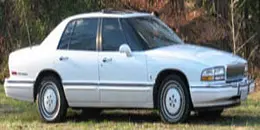
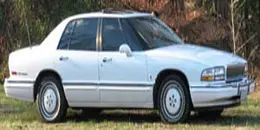
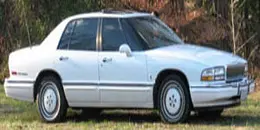
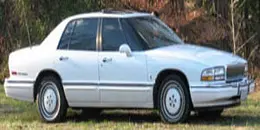
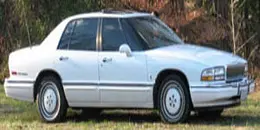
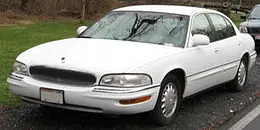
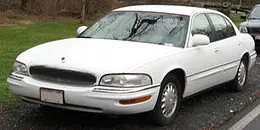
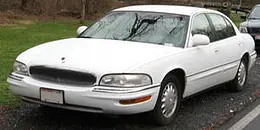
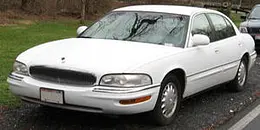
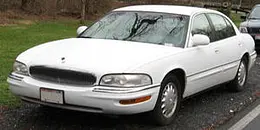
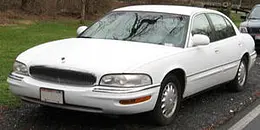
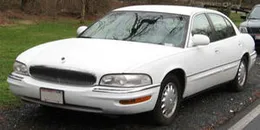
Problems for specific Buick Park Avenue years:
Problem Reports
Problem with your car? See what our experts say or submit your own.
2001 Buick Park Avenue Problems
Engine Stalling Due to Mass Air Flow/Crankshift Position Sensor Failure
The mass air flow or crankshaft position sensor may fail causing the engine to stall intermittently. Proper diagnoses will be necessary to determine the cause of any stalling condition.
Intake Manifold Gasket May Develop Engine Oil and/or Coolant Leak
The intake manifold gasket may develop external engine oil and/or coolant leak. The intake manifold will need to be removed and the gasket replaced to correct this issue.
HVAC Mode/Temperature Door Actuators May Fail
The mode and temperature door actuators may fail causing improper air flow or temperature output from the heating and AC (HVAC) system.
Erratic Shifting of the Automatic Transmission
The transmission pressure control solenoid may fail causing erratic shifting. Our technicians tell us that partial dis-assembly of the transmission is necessary to replace a failed pressure control solenoid.
Engine Overheating Due to Water Pump Leak
The water pump may develop a coolant leak resulting in an engine overheating condition.
Poor Ride/Handling Due to Worn Suspension Struts
The front struts may show signs of wear, or be excessively bouncy ride at freeway speeds. This may begin to occur at around 75,000 miles.
Loss of Power Steering Fluid From Steering Rack Failure
The steering rack may fail causing a loss of power steering fluid as a result the steering may become hard to turn.
Transmission Fluid Leak From Cooler Line
The rubber section of an automatic transmission cooler line may develop a fluid leak . In some cases the leaking section of hose can be replaced. In others, the complete cooler line must be replaced to correct this concern.
Wear in Outer Tie Rod Ends Can Cause Steering Problems
The outer tie rod ends on the steering linkage may wear causing excessive free play in the steering and uneven tire wear. If the worn tie rod ends are replaced, the wheel alignment should be checked and adjusted as necessary.
The Fuel Pump May Fail Causing the Engine to Stall or Crank Over But Not Start
The fuel pump can fail causing the engine to stall and not restart. Our technicians highly recommend to replace your fuel filter every 30,000 miles to help prevent undue strain on the fuel pump.
Erratic Fuel Gauge Operation
It is common for the fuel level sensor in the fuel tank read the fuel level incorrectly. The sensor must be replaced to correct the condition. Our technicians recommend having the complete fuel pump module replaced on high mileage vehicles.
High Pressure Power Steering Hose Can Leak Fluid
The high pressure power steering hose will commonly leak fluid; it should be replaced.
Fuel Gauge Needle Stuck on Wrong Side of "Empty Stop"
Do to a low or erratic voltage condition, the fuel gauge needle may "jump" around and become stuck on the back side of the "stop" below the "empty" indicator. This does not mean the gauge is broken. If the gauge cover is removed and the needle is gently moved back around to the correct side of the pin, the gauge will again function normally. When the needle is moved back to the correct position, the electrical problem that caused the needle to jump in the first place must be corrected or the needle may jump around again. The most common problems that cause this condition are a weak battery or corrosion on the battery cable ends.
Check Engine Light Due to Gas Cap Issue
Illumination of the Check Engine Light can be caused by a loose or worn gas cap.
Check Engine Light Due to Ignition Related Failures
Failure of the crankshaft position sensor, ignition control module, or powertrain control module (PCM) may cause the Check Engine Light to illuminate.
-
Verified
Quality Work -
Guaranteed
Fair Prices -
Happy
Customers