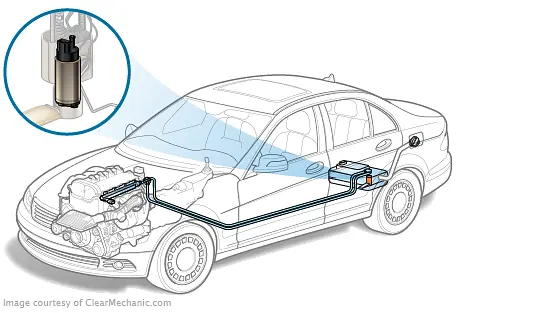
If the engine won't start, the mechanic will check for pressure at the fuel injectors when trying to start the car. If the injectors are getting enough fuel pressure, the next step is to check that the pump is delivering enough fuel.
If the pressure is low or nonexistent, the next step is to check the pump's electrical circuit. If the pump isn't receiving enough voltage or has a bad connection, the circuit may need replacing.
If the pump is working but is providing low pressure or too little fuel, the mechanic will check the fuel filter, as well as the electrical and mechanical condition of the fuel pump itself.
How is a fuel pump replaced?
The first step is to disconnect the battery, in order to reduce the chance of a fire.
For pumps inside the fuel tank, there will usually be an access cover that needs to be removed. With the cover off, the technician can replace the pump and pre-pump filter screen. In some cases, fuel will need to be drained before removing the access panel.
When the pump is outside the tank, the mechanic will disconnect the fuel lines, remove the pump and install the new one. Once the pump is replaced, another check will be done to ensure there are no fuel leaks and that the problem is solved.
Your car, services, and appointments in one place.
RepairPal recommendations for fuel pump issues
We recommend that the fuel filters are replaced at the same time as the fuel pump. This applies to the intake screen for in-tank fuel pumps, as well.
On some vehicles, the fuel pump relay is known to fail — it's a good practice to replace the relay when the pump is replaced.
What to look out for when dealing with fuel pump issues
Working with the fuel system is dangerous — take all precautions against starting a fire.
After the repair is done, be on the lookout for fuel leaks or odors. If you see or smell gasoline, do not start or drive the car, and do not park inside your house or under a covered structure. Have the car towed to a shop for inspection and repair.
A proper diagnosis is key, and can save you money. A clogged fuel filter or bad circuit can cause identical symptoms, so be sure the shop verifies the pump is the real problem before it's replaced.
Can I replace the fuel pump myself?
Because of the risk of fire, we recommend letting a repair shop handle this job. Unless you are very experienced in auto repair, leave this one to the professionals.
Fuel Pump Replacement Cost Estimates
The average cost for a Fuel Pump Replacement is between $1,247 and $1,506 but can vary from car to car.